
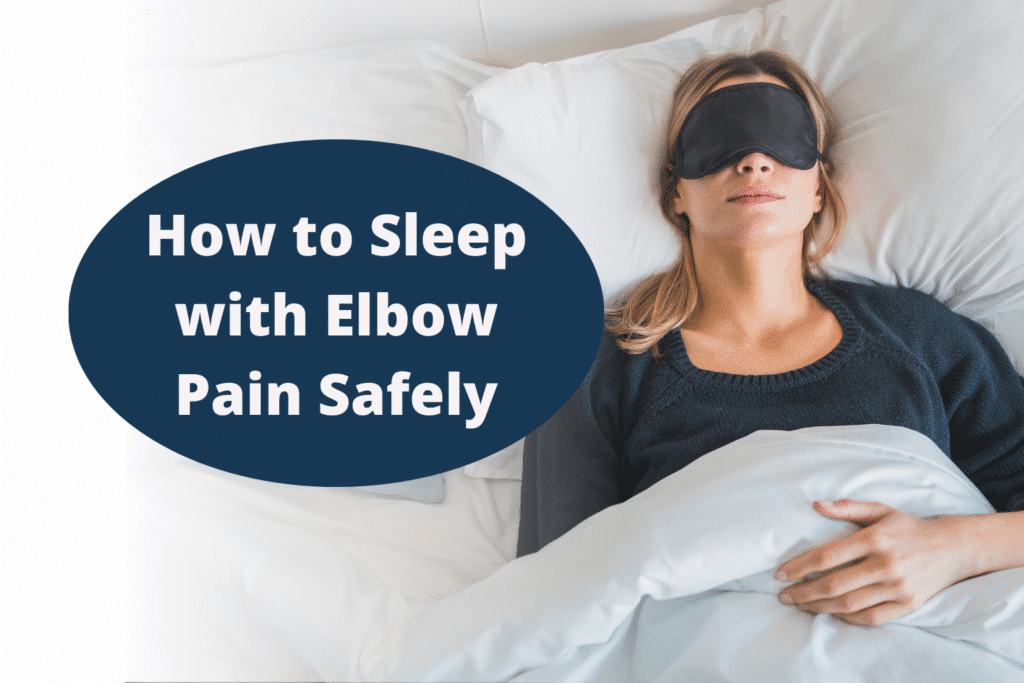
Elbow pain has a particular talent for showing up at the exact moment you want to rest. You settle into bed, ready to shut down the day, and—there it is. A slow ache. A sharp twinge. A stiffness that wasn’t as noticeable throughout your day.
What many people don’t realize is that sleep posture plays an enormous role in how the elbow feels overnight. A bent arm, pressure on an irritated tendon, or hours spent in one position can turn a mild annoyance into a real interruption.
The good news? You can absolutely make nights more comfortable. Small, thoughtful adjustments—recommended every day by physical therapists—can help you protect the joint, reduce elbow pain at night, and wake up feeling more like yourself. Below, we’ll walk through the why behind nighttime elbow pain and the best sleep strategies to support healing.

Why Elbow Pain Feels Worse at Night
If you’ve wondered why your elbow pain seems to worsen at night, you’re not imagining it. A few things happen behind the scenes after you fall asleep:
- Inflammation becomes more noticeable as natural cortisol levels dip
- Muscles and tendons stiffen after long periods without movement
- Bent-arm sleeping positions compress nerves—especially the ulnar nerve
- Direct pressure (like sleeping on your side) can irritate sore tendons or bursae
Nighttime is when your elbow finally “checks in,” and those signals feel stronger.

Best Sleeping Positions for Elbow Pain Relief
As you try out new sleeping positions to ease your pain, the goal isn’t perfection; it’s finding positions that keep your elbow supported, neutral, and relaxed.
Back Sleeping (Recommended)
Sleeping on your back naturally allows the elbow to rest in a more open, neutral position, reducing pressure on irritated tendons and nerves. Place a pillow or rolled towel under your elbow for gentle support. It prevents hyperextension and adds a little cushion.
Side Sleeping with a Pillow Support
Side sleepers don’t need to abandon their preferred position. Just avoid lying directly on the painful elbow. Sleep on the opposite side and hug a soft pillow or place it between your arms. This helps prevent your top arm from collapsing inward—one of the sneaky ways elbow pain gets triggered.
Avoid Sleeping with Bent Elbows
This is a big one. Many people naturally curl up at night, but bending the elbow for hours can irritate the ulnar nerve and flare up conditions like cubital tunnel syndrome. If you tend to bend your arm without realizing it, a light brace or pillow barrier can be enough to keep things neutral. This also applies to stomach sleeping. Try to avoid lying with your elbow slightly bent, either by or under your pillow, to avoid nerve compression and reduce pain.

PT Tips for Sleeping Comfortably with Elbow Pain
These simple changes can make meaningful improvements in how your elbow feels overnight.
1. Use a Supportive Pillow or Rolled Towel
Using a pillow to support your elbow as you sleep may help maintain a neutral angle, neither fully straight nor sharply bent. Think “comfortable halfway point.”
2. Apply Ice or Heat Before Bed
- Ice: helps calm inflammation
- Heat: relaxes tension and stiffness
Try each for 15–20 minutes and see what your body responds to best.
3. Try a Light Elbow Brace
A brace can limit excessive bending while you sleep, especially if nerve tension is the culprit.
4. Stretch Before Bed
Gentle forearm and wrist mobility exercises help release the tension that builds throughout the day. It sets the forearm muscles and wrist joint up for a calmer night.
5. Keep the Arm Elevated
If swelling is part of the picture, elevating your elbow on a pillow helps reduce fluid buildup and ease throbbing.
Your Journey to Recovery Starts Here
Experience tailored physical therapy programs designed to alleviate pain and restore function.
When to Seek PT for Persistent Nighttime Elbow Pain
Home adjustments help a lot, but not always enough. If elbow pain interrupts your sleep for more than a week, or you notice:
- Pain with everyday activities
- Loss of motion
- Recurrent irritation after rest
- Weakness or grip fatigue
These are signs it may be time to bring in a professional. As Ivy Rehab clinical expert Eric Cohen, PT, DPT, OCS, FAAOMPT, emphasizes, persistent symptoms—especially those lasting 7–10 days or more—should be evaluated by a physical therapist.
Physical therapy isn’t about masking discomfort. It’s about uncovering the root cause and restoring healthy movement so your night pain doesn’t keep coming back.
How Ivy Rehab Helps Relieve Elbow Pain
At Ivy Rehab, our PTs take a whole-arm approach to elbow pain. That means looking beyond the joint and assessing shoulder strength, posture, daily habits, and mechanics—because all of it affects how the elbow performs.
Your plan may include:
- Manual therapy to ease stiffness and improve mobility
- Targeted strengthening for forearm, shoulder, and scapular muscles
- Technique and movement coaching to reduce strain on painful areas at night and during the day
- Education on ergonomics, sleep positioning, and self-management
The goal is simple: help you move, live, and sleep better without elbow pain dictating your comfort.
Rest Well, Heal Well: Your Path Back to Comfortable Sleep
Sleep should feel restorative, not like another challenge to navigate. By creating a safer sleeping environment and understanding how to support your elbow overnight, you give your body a genuine chance to recover.
If elbow pain has been stealing your sleep, you’re not stuck with it. Our therapists are here to help you get relief, understand what’s driving your symptoms, and feel more in control of your nights again with targeted rehabilitation physical therapy techniques. For example, if you’re looking to reap the benefits of physical therapy for athletes, our therapists can provide relief for tennis elbow, golfer’s elbow, and beyond.
Ready to begin your recovery journey for deeper, easier rest? Schedule a consultation with an Ivy Rehab physical therapist at a location near you and take the next step toward pain-free sleep.
References
- Nationwide Children’s Hospital. Elbow Injuries in Young Throwers. https://www.nationwidechildrens.org/specialties/sports-medicine/sports-medicine-articles/elbow-injuries-in-young-throwers
- American Academy of Pediatrics. Little League Elbow. https://publications.aap.org/patiented/article/doi/10.1542/peo_document297/82141/Little-League-Elbow
- Ped Orthopaedics. Elbow Pain and Injury in Young Athletes.
- Jose F. Figueroa, et al. Cubital Tunnel Syndrome Review. JOSPT.
- National Center for Biotechnology Information. Medical Epicondyle Apophysitis (Little League Elbow). https://www.ncbi.nlm.nih.gov/books/NBK570592/

Before you go
Find the right therapy today.
Discover how Ivy Rehab can help you get back to doing what you love.