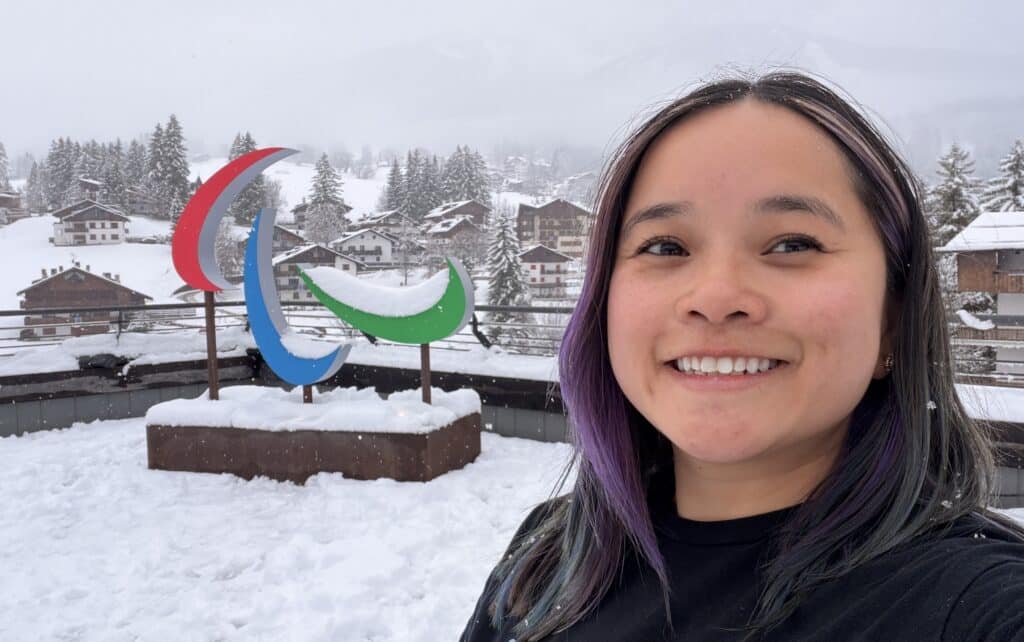
Most physical therapy volunteer work happens close to home. Ivy Rehab therapist Jenny Duong took it to the Paralympics.
When she was selected as a Paralympics volunteer and arrived in the mountains of Milan, it quickly became clear this would be anything but an ordinary experience. Surrounded by world-class athletes redefining what strength, recovery, and progress can look like, she reshaped how she sets patient goals and sees herself as a clinician.
Her story isn’t just inspiring—it’s practical. It shows how stepping outside your routine can change how you show up for patients.
The Spark That Led Her to the Paralympics
So how did she go from the clinic to the Paralympics, working alongside world-class athletes? It didn’t just start with the opportunity; it was built over time through the work she had already been doing.
Before joining Ivy Rehab Therapy, Jenny worked in hospital settings with patients recovering from amputations and spent time in the prosthetics space, an experience that shaped how she sees movement, adaptation, and resilience. She also worked with partner organizations like Special Olympics and Life Rolls On, helping people return to activities like surfing and skating after injury.
For her, the Paralympics felt like a natural next step. As she put it, “The Paralympics aren’t just for athletes, they’re an opportunity for people from all backgrounds to be part of something extraordinary.” That same mindset aligns closely with Ivy’s commitment to community engagement and serving others. In many ways, the Paralympics wasn’t a leap. It was the next chapter.
The Path to Becoming a Paralympic Volunteer
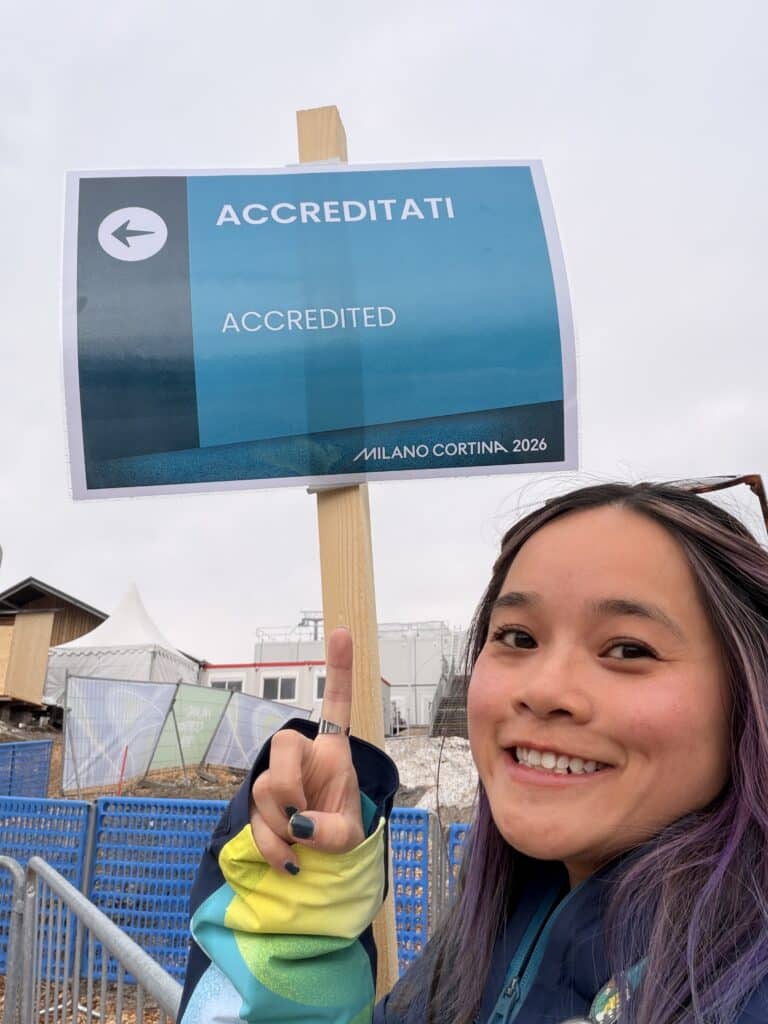
Here’s the part that surprises people: getting into a Paralympics volunteer role was fairly easy. As Jenny said, “Honestly, it was pretty simple. I just applied through the Paralympics volunteer portal online.” That’s it. No secret handshake. No hidden pathway. Just a simple online application. Sometimes opportunity doesn’t come from a perfect plan. It comes from an open door that you just have to walk through.
After a few months, she interviewed and received her assignment. When she arrived in Milan, she found a diverse, welcoming volunteer community, people from all backgrounds showing up for the same purpose.
For anyone exploring physical therapy volunteer opportunities, this is a good reminder that you don’t need a perfect resume—just curiosity, a willingness to help, and the ability to say yes. There was some uncertainty along the way, like not knowing her exact role until weeks before traveling, but that’s part of the process. Jenny didn’t have every detail figured out, and she didn’t need to.
Inside the Action: What It Really Looked Like Behind the Scenes
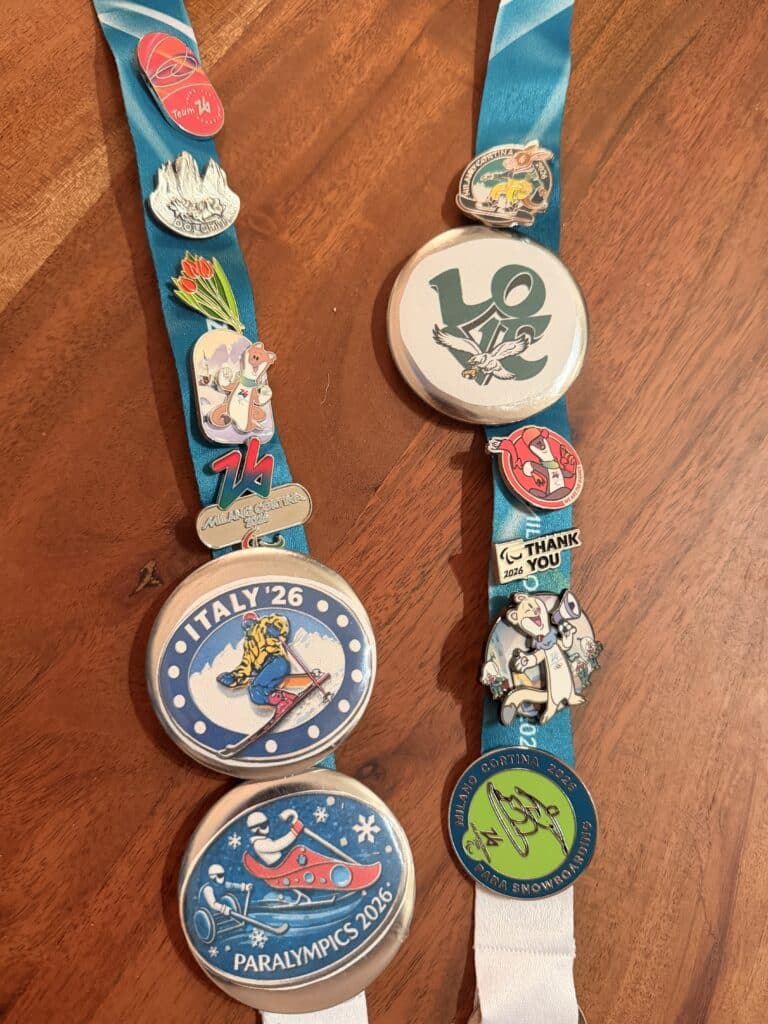
In Milan, Jenny wasn’t treating injuries on the sidelines, but she was right where things were happening. She worked in access control. As she described it, “Every day was a little bit different. I was helping athletes, their teams, media, and VIPs get where they needed to go.”
“That unpredictability was part of the magic,” she said. “It wasn’t really about the role. It was about being part of something bigger than any single moment.”
She saw athletes with MS, visual impairments, dystonia, and limb loss competing, not cautiously or tentatively, but at an elite level. It wasn’t just impressive, it was perspective-changing. These athletes weren’t defined by limitations, but by adaptation, creativity, and relentless forward movement.
One story that stuck with her was Mike Schultz, an athlete who designed a prosthetic knee now used by others in competition. “Seeing innovation and community support come together firsthand was really powerful,” she said. It’s the kind of innovation that doesn’t just solve a problem, it opens doors for an entire community. And that’s the thread running through it all: possibility.
How the Paralympics Transformed Her Approach to Patient Care
Jenny described this as one of the most meaningful experiences of her career. On one level, she admits, it was somewhat flashy and glamorous—but much more importantly, it clarified something simple. Rehabilitation isn’t just about getting back to baseline. As Jenny explained, it’s about “helping people gain confidence and continue pursuing the things they love.”
In the clinic, that might look like walking with a little more confidence, returning to a favorite activity, or trusting your body again. These aren’t headline-worthy moments in most cases, but they’re deeply important ones. This is how we define progress at Ivy Rehab.
The Paralympics didn’t change what Jenny does; it changed how she sees it. Volunteering has a profound impact on both the people receiving care and those providing it. In fact, research shows improvements in physical and mental health, and overall well-being, among volunteers, reinforcing how powerful that connection can be on both sides.
Why Motivation, Goals, and Perspective All Work Together
Jenny saw what’s possible at the highest level, but she doesn’t expect her patients to match that. However, many of the athletes she watched weren’t just performing in the moment; they were drawing on experiences that had already tested them, building resilience over time.
That perspective carried over into her everyday practice. As she explained, “You have to give people small wins so they can start to see the bigger picture.” Motivation builds, often quietly, as progress starts to feel real.
In the clinic, the focus shifts to helping each individual find their own version of progress. “It’s not just about setting goals. It’s about what the patient actually wants to improve,” she said. For some patients, progress means moving with less pain. For others, it’s feeling steady on their feet or getting back to a routine or sport they love.
That kind of progress is at the heart of Ivy’s approach to tailored therapy programs that support real-life goals. None of these are one-size-fits-all, and they shouldn’t be.

Where Purpose Meets Practice: The Power of Ikigai in Patient Care
Jenny also connected her experience to the Japanese concept of ikigai, often described as a “reason for being” or a sense of purpose that gives life meaning. It reflects the alignment of what you love, what you’re good at, and how you contribute to something beyond yourself. As she described it, it’s about “bringing those pieces together in a way that feels meaningful.”
For Jenny, that idea is personal.
After a car accident in high school, she spent months in physical therapy. What started as recovery became something more. It showed her the impact physical therapy can have, not just physically, but emotionally and relationally, shaping how people move forward in their lives.
That experience stayed with her. Over time, physical therapy became her version of ikigai. It’s what she loves, what she’s good at, and how she helps people all come together. At Ivy, that shows up in the way we approach care every day: helping people keep moving forward in ways that matter to them.
Your Next Chapter Starts Here
If you’re working toward getting back to something you love, whether that’s a sport, a routine, or just feeling like yourself again, we’re here to help. Find a clinic near you or request an appointment to get started.
References
- “Milano Cortina 2026 Paralympic Winter Games.” Olympics.com. Accessed Mar. 30, 2026. https://www.olympics.com/en/milano-cortina-2026/paralympic-games/about-us
- Jenkinson, C. E., Dickens, A. P., Jones, K., et al. “Is Volunteering a Public Health Intervention? A Systematic Review and Meta-Analysis of the Health and Survival of Volunteers.” BMC Public Health. 2013. Accessed Mar. 30, 2026. https://bmcpublichealth.biomedcentral.com/articles/10.1186/1471-2458-13-773
- Sato, M., et al. “Physical, Mental, and Social Health Benefits of Volunteering: A Systematic Review.” Accessed Mar. 30, 2026. https://pmc.ncbi.nlm.nih.gov/articles/PMC10159229/

Before you go
Find the right therapy today.
Discover how Ivy Rehab can help you get back to doing what you love.