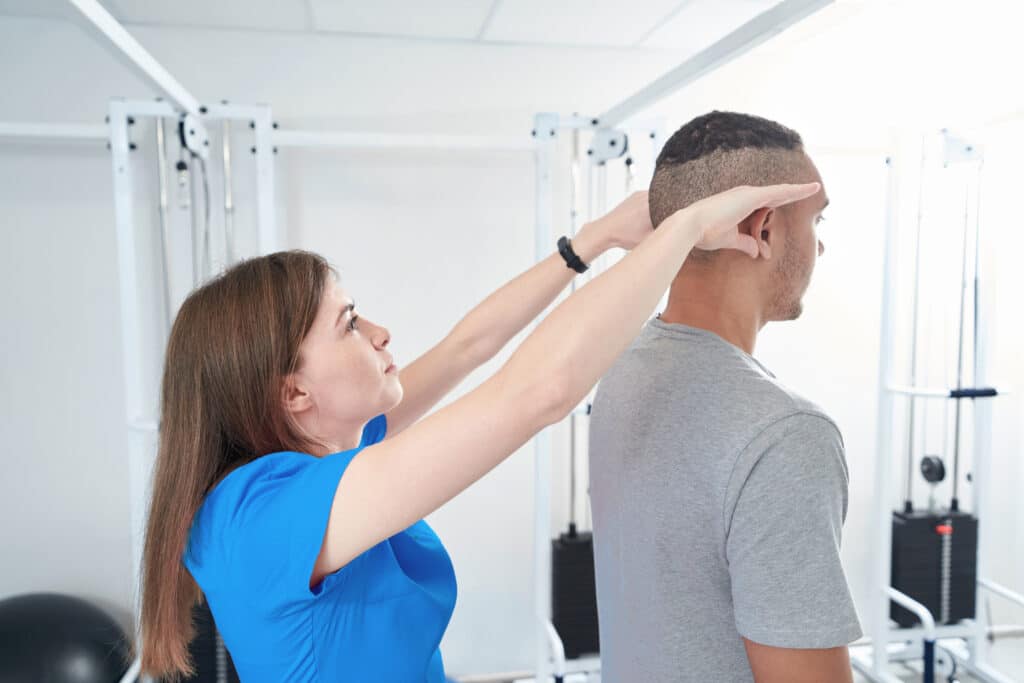


If you’ve been dealing with elbow pain and aren’t sure what’s causing it, you’re not alone. Two of the most common culprits—tennis elbow and golfer’s elbow—sound almost interchangeable, yet they show up in different places and respond best to different types of care. Understanding the difference between tennis and golfer’s elbow helps you get the proper treatment instead of guessing your way through the pain.
At Ivy Rehab, our physical therapists see both conditions often. With the right information and a clear rehab plan, you can rebuild strength, protect your elbow, and get back to the activities that make you feel like yourself.
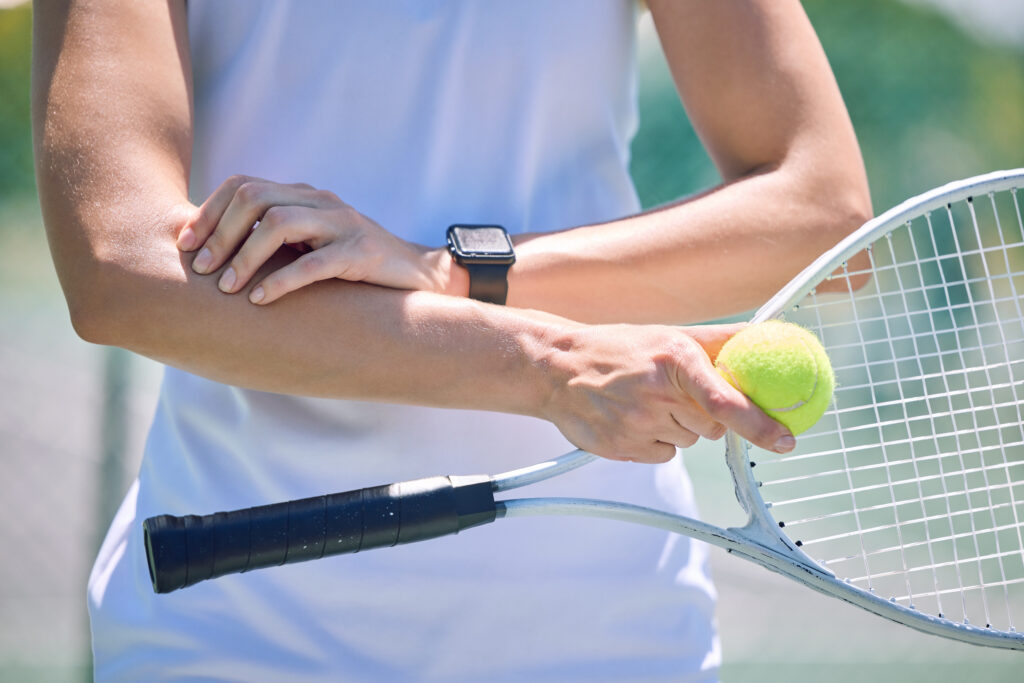
Tennis Elbow vs Golfer’s Elbow: Key Differences
Both tennis elbow and golfer’s elbow are forms of tendon overuse, but they don’t affect the same structures. That’s why golfer’s elbow vs tennis elbow feel so different despite sharing similar causes and symptoms.
| Feature | Tennis Elbow | Golfer’s Elbow |
|---|---|---|
| Medical Name | Lateral epicondylitis | Medial epicondylitis |
| Pain Location | Outer elbow (extensor tendons) | Inner elbow (flexor tendons) |
| Common Causes | Repetitive wrist extension, gripping | Repetitive wrist flexion, twisting |
| Typical Activities | Tennis, typing, lifting, carpentry | Golf, throwing, manual labor |
| Muscles Affected | Wrist and finger extensors | Wrist and finger flexors |
Here’s a simple way to remember it:
- Tennis elbow affects the muscles that help lift your wrist back.
- Golfer’s elbow affects the muscles that help curl your wrist forward.
Common Symptoms of Tennis Elbow vs Golfer’s Elbow
Even though golfer’s elbow and tennis elbow involve different tendons, both conditions share several hallmark signs:
- Pain at or around the elbow that may travel down the forearm
- Tenderness on the outer elbow (tennis) or inner elbow (golfer’s)
- Weakness with gripping or lifting
- Stiffness in the elbow when bending or straightening the arm
- Discomfort that worsens during repetitive or forceful motions
The biggest clue is which motion makes the pain flare.
- Pain with wrist extension—lifting your hand back—leans toward tennis elbow.
- Pain with wrist flexion—curling your palm toward your forearm—often suggests that pain in the elbow is caused by golfer’s elbow.
What Causes These Overuse Injuries
Despite their sports-inspired names, you don’t need to swing a racket or club to develop either problem. Golfer’s elbow and tennis elbow can be caused by habits in everyday life.
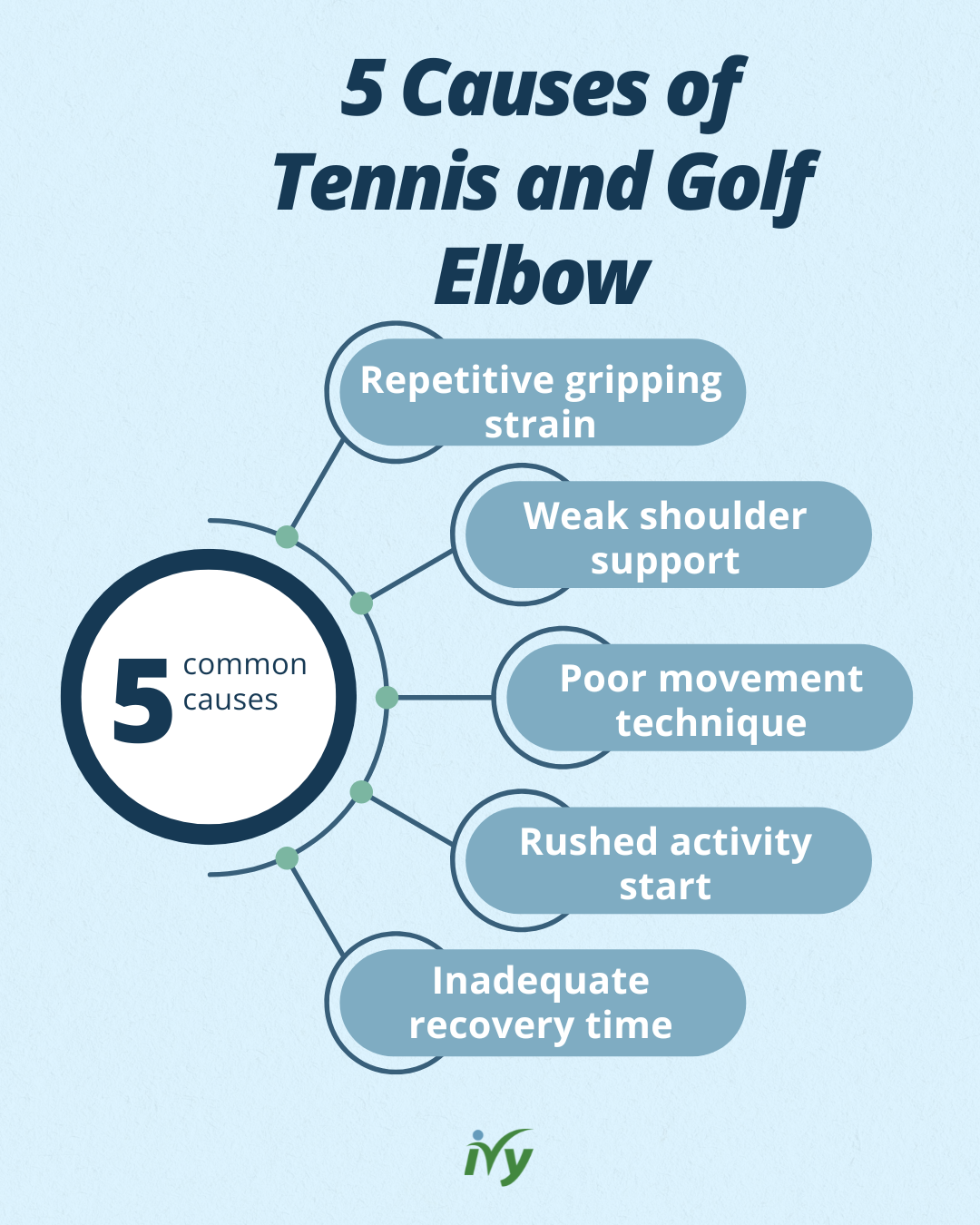
Common contributors include:
- Repeated gripping or lifting — carrying bags, using tools, keyboard work
- Weak shoulder or wrist stabilizers — forcing the smaller forearm muscles to work overtime
- Poor technique during sports, lifting, or repetitive tasks
- Jumping into activities too quickly without gradually building tolerance
- Limited flexibility or inadequate recovery time between workouts or tasks
As Ivy Rehab clinical expert Eric Cohen, PT, OCS, FAAOMPT, notes, overuse injuries stem from strain that “overloads the tissue faster than it can recover,” especially when movement patterns aren’t efficient.
How Physical Therapy Treats Each Condition
A strong treatment plan does more than reduce pain—it restores healthy tendon function and supports long-term strength. Physical therapy programs for golfer’s elbow vs tennis elbow look similar at first glance, but the focus points differ.
For Tennis Elbow (Lateral Epicondylitis)
The following treatment options are ideal for people diagnosed with tennis elbow:
- Manual therapy to reduce tension in the extensor tendons
- Strengthening exercises for the wrist, forearm, and shoulder
- Eccentric loading to rebuild tendon resilience
- Mobility and ergonomic training to reduce strain during work or sport
For Golfer’s Elbow (Medial Epicondylitis)
Treatment for tennis elbow differs slightly from treatment for golfer’s elbow. Golfer’s elbow calls for:
- Gentle stretching to ease tightness in the flexor muscles
- Progressive grip and wrist-flexion strengthening
- Soft tissue work to reduce tendon irritation
- Movement and posture coaching to address mechanics that overload the inner elbow
Get Back in the Game Stronger
Comprehensive rehabilitation for sports injuries and performance enhancement.
Shared PT Treatment Techniques
Though there are differences between tennis elbow and golfer’s elbow rehabilitation, both conditions benefit from a comprehensive rehab approach:
- Manual therapy for stiffness and circulation
- Strengthening of the entire kinetic chain—shoulder, scapula, trunk, and wrist
- Modalities like heat or ice to ease early-stage irritation
- Activity modification to reduce unnecessary load and prevent flare-ups
This blend of hands-on care and targeted exercise helps your elbow tolerate stress again while reducing the chance of recurrence.
Recovery Timeline and Expectations
Everyone heals at their own pace, but most people notice steady improvement when they stay consistent with therapy and home exercises for the forearm and elbow.
- Mild cases: 4–6 weeks
- Moderate to severe cases: 8–12 weeks or longer
- Early treatment: helps prevent chronic irritation and tendon degeneration
A thoughtful, gradual program protects the healing tendon while rebuilding strength in the surrounding muscles—something a “wait and see” approach rarely accomplishes.
Why Choose Ivy Rehab for Elbow Pain Treatment
Your elbow doesn’t work in isolation, and neither should your treatment plan for tennis or golfer’s elbow. Ivy Rehab’s orthopedic and sports physical therapists look at the entire kinetic chain—shoulder, trunk, forearm, and wrist—to understand what’s driving your symptoms, from internal pains to an elbow that’s tender to the touch.
We offer:
- Personalized strengthening and mobility programs
- Hands-on treatment tailored to your specific pain pattern
- Ergonomic and movement coaching
- Guidance that supports both daily life and sport-specific goals to prevent the condition from worsening
Our goal is simple: help you move with strength and confidence again.
Get Back to the Activities You Love
Tennis elbow and golfer’s elbow may sound similar, but they require different strategies to heal well. With the right physical therapy rehabilitation plan, you can reduce pain, rebuild tendon health, and prevent your elbow from getting caught in a cycle of flare-ups.
If elbow pain is slowing you down, we’re here to help you sort out what’s going on and create a plan that supports long-term recovery. Schedule your screening with an Ivy Rehab therapist and take the first step toward feeling like yourself again.
References
- Coombes BK, Bisset L, Vicenzino B. A new integrative model of lateral epicondylalgia. Br J Sports Med. 2009. https://pubmed.ncbi.nlm.nih.gov/19050004/
- Shiri R, Viikari-Juntura E. Lateral and medial epicondylitis: a systematic review. Occup Environ Med. 2011. https://pubmed.ncbi.nlm.nih.gov/21663849/
- Nationwide Children’s Hospital. Elbow Injuries in Young Throwers. https://www.nationwidechildrens.org/specialties/sports-medicine/sports-medicine-articles/elbow-injuries-in-young-throwers

Before you go
Find the right therapy today.
Discover how Ivy Rehab can help you get back to doing what you love.