
Recovering from a concussion isn’t just about resting and waiting for symptoms to pass; it’s about giving your brain and body the right environment to heal. Headaches, vision problems, fatigue, and dizziness after a concussion can linger for a long time, affecting everything from school and sports to daily routines.
With the right approach, movement can become part of the solution. Gentle, targeted concussion rehab exercises—done under the guidance of a physical therapist—can help restore balance, improve cognitive focus, and rebuild confidence in your body.
This concussion exercise guide explains some of the most common exercises used in professional concussion rehabilitation. At Ivy, our licensed physical therapists specialize in concussion recovery, tailoring each program to your unique needs and symptoms in every stage of healing.
Safety First
Every concussion is different. Before starting any type of therapy or exercise program, get clearance from your healthcare provider and work with a physical therapist experienced in concussion treatment. They’ll assess your symptoms, guide you through the right progressions, and ensure exercises are safe for your specific stage of recovery.
Your physical therapist may start with basic movement screens and symptom checklists, gradually introducing activities while tracking how your body responds. If symptoms (such as increased dizziness, nausea, or headaches) worsen, exercises can be adjusted immediately to keep recovery on track.
Vestibular (Balance) Exercises
The vestibular system helps you keep your balance, coordinate movement, and stabilize your vision when your head moves. After a concussion, this system may need retraining. Vestibular exercises for concussion are designed to help the brain and body work together again, reducing dizziness and improving stability.
Gaze Stabilization
- Focus your eyes on a fixed target in front of you.
- Slowly move your head side to side while keeping the target in clear focus.
- Gradually increase speed as tolerated.
This exercise helps restore visual stability during motion, which is often disrupted after a concussion. Patients with concussions or post-concussion syndrome often describe feeling “off” in busy environments like grocery stores. This type of exercise can make those activities more manageable.
Standing Balance Progression
- Start with feet together on a flat surface.
- Progress to standing on one leg.
- Try balancing on a foam pad or unstable surface when ready.
These balance exercises after a concussion help rebuild coordination, postural control, and confidence in daily movement. They also prepare you for activities like walking on uneven terrain or returning to sports drills.
Oculomotor (Eye Movement) Exercises
Concussions can affect how your eyes move and work together. Oculomotor exercises help improve focus, coordination, and reduce visual discomfort. Your physical therapist may incorporate these into your treatment plan alongside vision therapy if needed.
Smooth Pursuits
- Keep your head still.
- Follow a slowly moving object (like a pen) with your eyes.
This strengthens the brain’s ability to track moving targets and is helpful for activities like driving, reading, or following a ball in sports.
Saccades
- Place two visual targets (like sticky notes) at eye level.
- Quickly shift your gaze from one to the other.
Over time, this improves rapid and accurate eye movement, making screen use or classroom activities more comfortable.
Recover Faster, Perform Better
Our therapists specialize in helping athletes of all levels return to peak condition.
Neck Mobility & Strengthening
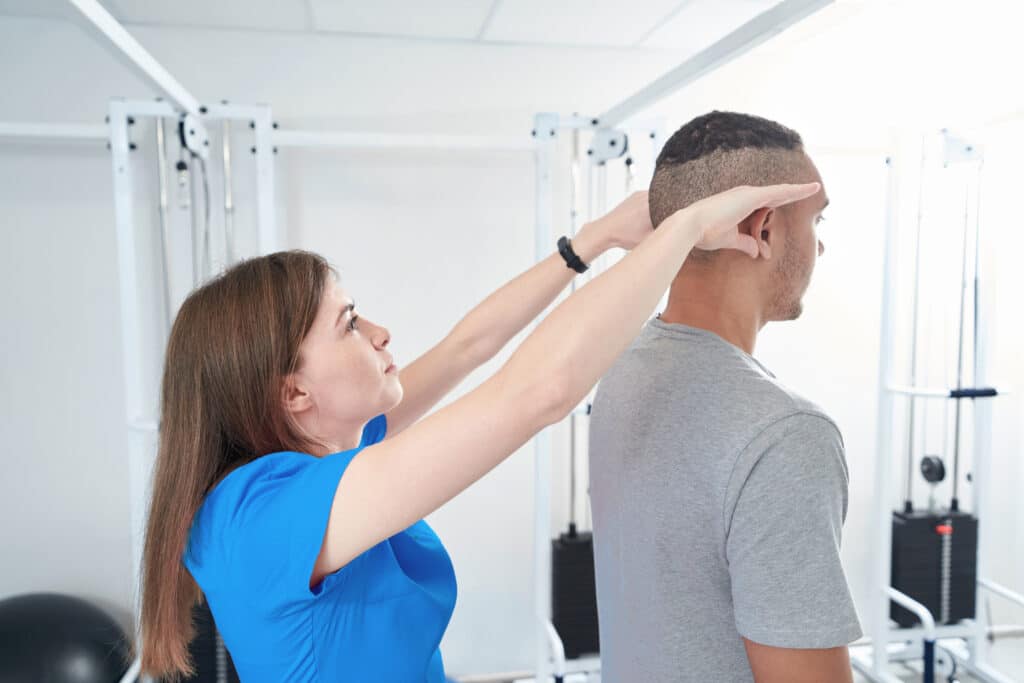
Neck stiffness and tension headaches are common after head injuries. Gentle neck exercises after concussion can improve range of motion, reduce pain, and support posture.
Chin Tucks
- Sit or stand tall.
- Pull your chin slightly inward (like making a double chin).
- Hold for 5 seconds, then relax.
This strengthens deep neck stabilizers and can reduce headache frequency.
Neck Rotation Stretch
- Slowly turn your head to one side until you feel a stretch.
- Hold for 10–15 seconds.
- Repeat on the other side.
Improved neck mobility can reduce strain on surrounding muscles and help restore normal movement patterns.
Light Aerobic Conditioning
When appropriate, low-impact aerobic exercise like cardio can help boost circulation, regulate blood flow to the brain, and support overall healing.
Walking Program
- Begin with 5–10 minutes of slow, steady walking.
- Gradually increase time and pace as symptoms allow.
Aerobic exercise can be as simple as walking in a quiet hallway or around your neighborhood before progressing to more stimulating environments.
Stationary Cycling
- Pedal at an easy pace for a few minutes.
- Avoid overexertion to prevent symptom flare-ups.
Cycling is often a preferred choice because it allows cardiovascular conditioning without excessive head movement.
Functional Integration
Once symptoms improve, your physical therapist will begin incorporating more functional, sport-specific, or work-related activities. For example:
- A student athlete may practice controlled dribbling drills.
- An office worker might simulate a busy workday with screen time breaks.
- A parent may rehearse lifting and carrying tasks to prepare for childcare duties.
This step bridges the gap between clinical exercises and real-world performance.
Tracking Your Progress
A symptom log can help you and your physical therapist see patterns, make adjustments, and celebrate progress. Note the type of exercise, duration, and how you felt during and after. Many Ivy therapy clinics use structured return-to-activity protocols to track safe advancement through each recovery stage.
Why Work with Ivy Rehab
At Ivy, concussion recovery isn’t a one-size-fits-all process. Our therapists combine advanced clinical training with compassion and encouragement, guiding you through each phase of healing. We specialize in integrating concussion rehab exercises into a personalized rehabilitation physical therapy plan that respects your current limits while helping you move toward your goals.
Whether you’re an athlete, a student, or recovering from a fall, our physical therapy team can coordinate with your physician, coaches, and school to ensure a safe return to activity. Learn more about concussion management at Ivy and how we can help.
Conclusion
Concussion recovery takes patience, persistence, and the right guidance. By incorporating safe, progressive exercises under professional supervision, you can restore balance, mobility, and confidence. When you’re ready to take the next step, Ivy is here to help you navigate the path forward.
Find a location near you to start your personalized recovery plan today.
References
- Centers for Disease Control and Prevention – Concussion & Mild TBI
- American Physical Therapy Association – Vestibular Rehabilitation
- Alsalaheen, B.A., Mucha, A., Morris, L.O., et al. (2010). Vestibular rehabilitation for dizziness and balance disorders after concussion. Journal of Neurologic Physical Therapy, 34(2), 87–93. https://pubmed.ncbi.nlm.nih.gov/20588094/
Before you go
Find the right therapy today.
Discover how Ivy Rehab can help you get back to doing what you love.