

It often starts with a moment you didn’t see coming. A misstep on the stairs. A hard tackle in the final quarter. A fender bender on your way home. At first, you think, I’ll be fine. But then the headache lingers. The lights feel too bright. Your focus slips away mid-conversation.
At Ivy, we see these moments every day, and we know how disorienting they can be. Concussion recovery is a journey made up of small, important wins. With the right treatment plan and the right people in your corner, each win builds momentum toward getting back to your life.
This guide explains what to expect after a concussion, how to manage each stage of recovery, and when specialized medical care can help. Ivy’s concussion and vestibular specialists work with patients every day – from athletes to accident survivors – designing personalized, evidence-based concussion rehabilitation plans that restore balance, reduce symptoms, and get you back to living fully. If you’re looking for a clear path to return to normal activity, concussion management and recovery start here.
What Is a Concussion?
A concussion is a mild traumatic brain injury. You don’t have to lose consciousness or fall to the ground for it to be serious. Caused by a bump, blow, or jolt to the head or body, a concussion injury temporarily disrupts normal brain function – sometimes in ways you won’t notice right away.
For more background on concussion causes and symptoms, visit the CDC Heads Up Program.
“One of the first things we explain to patients is that concussion symptoms can be wide-ranging and unpredictable,” says Robin Evans, PT, DPT, Director of Ivy’s Vestibular Specialty Program. “Dizziness, vision changes, mental fog – they may all stem from the same injury.”
Immediate Steps After a Concussion
First 24-48 Hours
Think of this as your reset window:
- Keep activity light and calm – this is not the time for strenuous workouts or deep focus tasks.
- Limit screen use and bright light exposure.
- Stay hydrated and follow a consistent sleep routine.
- Write down any symptoms so your Ivy medical care team can track patterns.
“The first few days aren’t about doing nothing. They’re about doing the right kind of nothing,” says Dr. Evans. “Every choice you make can either help the brain rest or keep it stirred up.”
Warning Signs Requiring Urgent Care
Seek immediate medical attention if you experience:
- Severe or worsening headaches
- Persistent vomiting
- Trouble walking, speaking, or waking up
- Sudden mood or behavior changes
Concussion Recovery Timeline
Every person’s healing looks a little different, but understanding a concussion recovery timeline helps you and your care team set realistic goals.
Early Recovery Phase (First Week)
This stage is about creating a calm environment for healing. Short walks, light reading, or listening to music are fine as long as they don’t worsen symptoms. The priority is to notice what feels okay and avoid what doesn’t.
Intermediate Recovery (1-3 Weeks)
This is where the “first wins” start stacking up. You can read without squinting, walk farther without dizziness, or focus longer on conversations. Ivy therapists help you build on these gains with carefully paced mental and physical activity so each step forward sticks. This stage often marks the shift from basic rest to guided concussion rehabilitation, where you can engage in concussion rehab exercises.
Long-Term Recovery (>3 Weeks)
If symptoms are still interfering with daily life, targeted concussion rehabilitation takes center stage. This may include vestibular therapy for concussion, oculomotor training, or graded exercise, always designed around your personal needs and goals
Your Journey to Recovery Starts Here
Our expert therapists are committed to helping you achieve your health goals.
The Role of Physical Therapy in Concussion Recovery
For more about concussion rehabilitation from a rehabilitation physical therapy perspective, see the American Physical Therapy Association’s concussion management guide.
Vestibular Therapy for Concussion
For dizziness, imbalance, or motion sensitivity, Ivy’s vestibular specialists guide you through:
- Gaze stabilization to improve vision during movement
- Balance retraining to steady your footing
- Motion tolerance exercises to make everyday movements feel normal again
“One of the most rewarding moments in concussion recovery is when a patient tells me, ‘I feel steady again,” says Dr. Evans. “Vestibular therapy for concussion gives people back their confidence in movement. It’s not just about treating dizziness; it’s about restoring how they experience the world.”
Oculomotor and Visual Coordination Training
After a concussion, your eyes and brain may not communicate as smoothly as they used to. This can make daily tasks – from reading emails to walking through a busy store – feel exhausting. Ivy therapists use targeted exercises to:
- Retrain how your eyes track and focus
- Improve coordination between eye movements and head movements
- Reduce light sensitivity and visual fatigue
When your visual system works efficiently again, everyday life feels clearer, calmer, and less draining – an important milestone in your concussion recovery timeline.
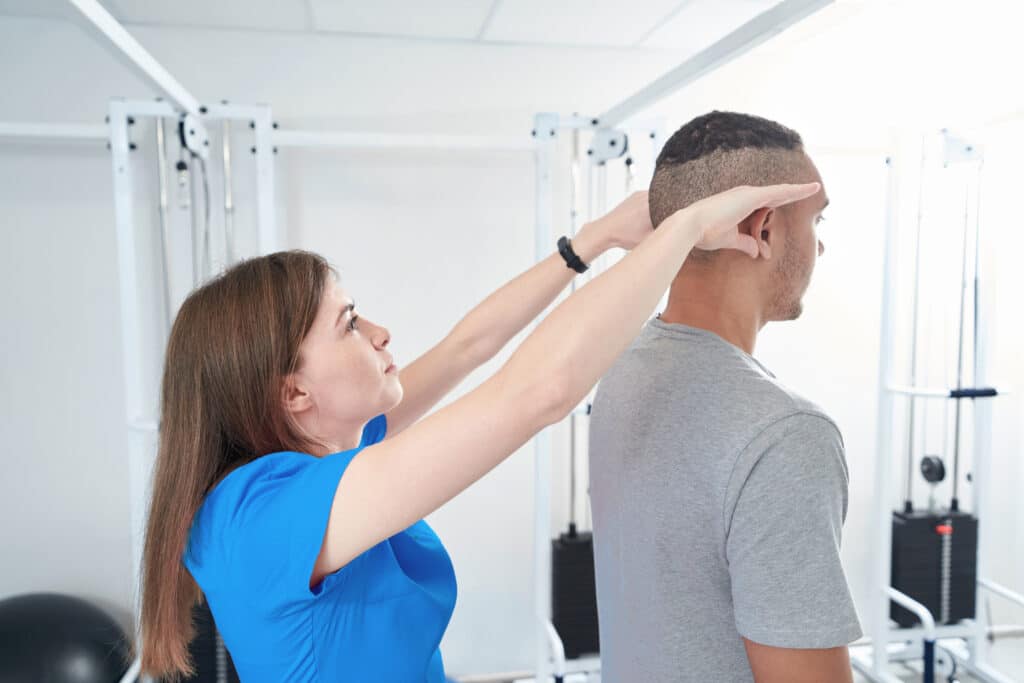
Cervical (Neck) Rehabilitation
Neck pain and stiffness can be an overlooked driver of other concussion symptoms, like headaches and dizziness after a concussion. Our therapists address these issues with:
- Gentle hands-on techniques to restore mobility
- Posture correction to reduce strain during daily activities
- Gradual strengthening to support your head and neck alignment
Easing neck tension often lifts other symptoms, creating space for your brain and body to heal together.
Graded Exercise Programs
A concussion can make even light exertion feel like a setback if it’s not introduced at the right pace. That’s why Ivy builds a personalized treatment progression plan that:
- Starts with low-intensity movement you can tolerate without triggering symptoms
- Gradually increases duration, complexity, and intensity over time
- Monitors heart rate, symptom changes, and recovery between sessions
The result is a safe path back to full activity, whether that’s competing on the field, running errands, or keeping up with your kids. This is an essential step in the concussion recovery timeline.
Gradual Return to Activity
Return-to-Learn
We help students rejoin class without overwhelming their brains, starting with lighter workloads and built-in breaks.
“For students, the hardest part can be knowing when to stop,” says Dr. Evans. “We help them build stamina for schoolwork while making sure the brain gets enough recovery time between demands.”
Return-to-Work
Work tasks, schedules, and environments can all be adjusted to reduce triggers and ease your return to work. We guide you in balancing productivity with recovery so progress in one doesn’t undo the other.
Return-to-Sport
From light aerobic exercise to full practice, each step is monitored. No one moves to the next stage until it’s safe to do so – and that’s a green light worth waiting for in your concussion recovery timeline.
Managing Persistent Symptoms
Identifying Post-Concussion Syndrome (PCS)
If headaches, dizziness, or brain fog last beyond a month, it may be PCS. Learn more about PCS from the Mayo Clinic.
How Ivy Rehab Helps
We create a treatment plan that targets root causes – whether they’re balance-related, vision-related, or cognitive – while coordinating with your physician for comprehensive care.
“Persistent symptoms don’t mean you’re stuck this way,” Dr. Evans explains. “It just means your recovery needs a more targeted approach. We break it down into manageable steps so progress feels possible again.”
Emotional and Mental Well-Being During Recovery
Physical Activity’s Role in Mental Health
Even light activity can boost mood and reduce anxiety. The key is finding movement you can tolerate without worsening symptoms.
Coordinated Support
If emotional strain is part of your recovery, we connect you to counseling, peer support, or other resources that fit your needs.
“Recovery isn’t just about rest and the physical changes,” says Dr. Evans. “When you understand what’s happening and have a plan, it takes a huge weight off mentally. That confidence can be as important as any exercise we prescribe.”
Why Choose Ivy for Concussion Recovery
- Hands-on guidance from a therapist with advanced training in concussion rehabilitation
- A recovery plan built for your life – not just your injury
- Direct communication with doctors, teachers, and coaches for consistent support
- Evidence-based strategies, including advanced vestibular therapy for concussion, are backed by the latest research
Conclusion
Concussion recovery is a process of building on small wins until you’re fully back to the things you love. With early physical therapy for a concussion, you can shorten recovery time, prevent complications, and move forward with confidence.
Find a clinic near you or explore our vestibular rehab services and start your concussion recovery journey today.
References
- Publication. “The name of the article.” https://the-url-to-the-article-reference.
- Publication Two. “The name of the article.” https://the-url-to-the-article-reference.
- Publication Three. “The name of the article.” https://the-url-to-the-article-reference.

Before you go
Find the right therapy today.
Discover how Ivy Rehab can help you get back to doing what you love.