
The brain does sensory integration all day, often automatically. It takes in information from sight, sound, touch, taste, smell, movement, body position, and internal body signals, then tells the body how to respond.
For a child, sensory integration helps with everyday things like sitting at circle time, climbing, getting dressed, using a pencil, or staying calm in a busy cafeteria. When sensory processing doesn’t run smoothly, simple routines can feel harder.
Understanding sensory integration can help parents see why a child may struggle with movement, self-regulation, motor planning, sensory overload, or daily tasks.
Key Takeaways
- Sensory integration is the process by which the brain receives, organizes, and uses sensory information to support movement, behavior, and daily routines.
- Sensory processing difficulties may affect touch, movement, balance, body awareness, attention, emotional regulation, and motor skills.
- The tactile, vestibular, and proprioceptive systems play a big role in how children move, play, learn, and participate in everyday life.
- Ayres Sensory Integration (ASI) is a specific therapy model developed by occupational therapist A. Jean Ayres.
- Occupational therapists may also use sensory-based interventions and environmental supports as part of a broader treatment plan.
- Pediatric occupational therapy can help children build practical skills for home, school, play, and self-care routines.
Quick Navigation
- What Is Sensory Integration?
- Why Sensory Integration Matters in Daily Life
- Sensory Systems That Often Need Support
- What Sensory-Based Support Can Look Like
- How Occupational Therapy Helps
What Is Sensory Integration?
Sensory integration is the brain’s process for taking in sensory input and using it to respond. Occupational therapist A. Jean Ayres defined the term and developed a specific therapy model based on it. Today, occupational therapists may support sensory needs in different ways, including sensory-based interventions, environmental modifications, and practical strategies for daily routines.
When sensory integration works well, a child can filter, connect, and respond to information from several senses at once. They may adjust their posture, use the right amount of force, follow a classroom routine, or try a new food without having to think through every step.
When that process is more difficult, a child may feel overwhelmed, seek additional sensory stimulation, or have trouble planning movements. These challenges aren’t a choice. They often mean the nervous system needs more support.
Why Sensory Integration Matters in Daily Life
Sensory integration affects more than comfort with sounds or textures. It helps children understand where their body is, how to move safely, and how to respond.
Children use sensory integration to:
- Stay balanced while walking, climbing, or playing.
- Know how hard to press with a pencil, fork, or toothbrush.
- Get dressed, handle grooming, try food textures, and join messy play with less stress.
- Notice body signals, such as hunger, bathroom needs, fatigue, or discomfort.
- Plan movements for dressing, handwriting, playing, and sports.
- Stay calm in busy, loud, bright, or unpredictable spaces.
Sensory integration difficulty can show up in school participation, social interaction, sleep, meals, self-care, and family routines.
Sensory Systems That Often Need Support
Sensory integration involves all of the senses, but occupational therapists often pay close attention to touch, movement, and body awareness. These systems can affect comfort, balance, coordination, and a child’s response to everyday activities.
These three systems often play a major role in daily routines.
1. Tactile System
The tactile system helps the body notice and respond to touch, texture, pressure, pain, and temperature. It helps a child understand what they’re touching, what’s touching them, and whether that sensation feels safe, uncomfortable, or overwhelming.
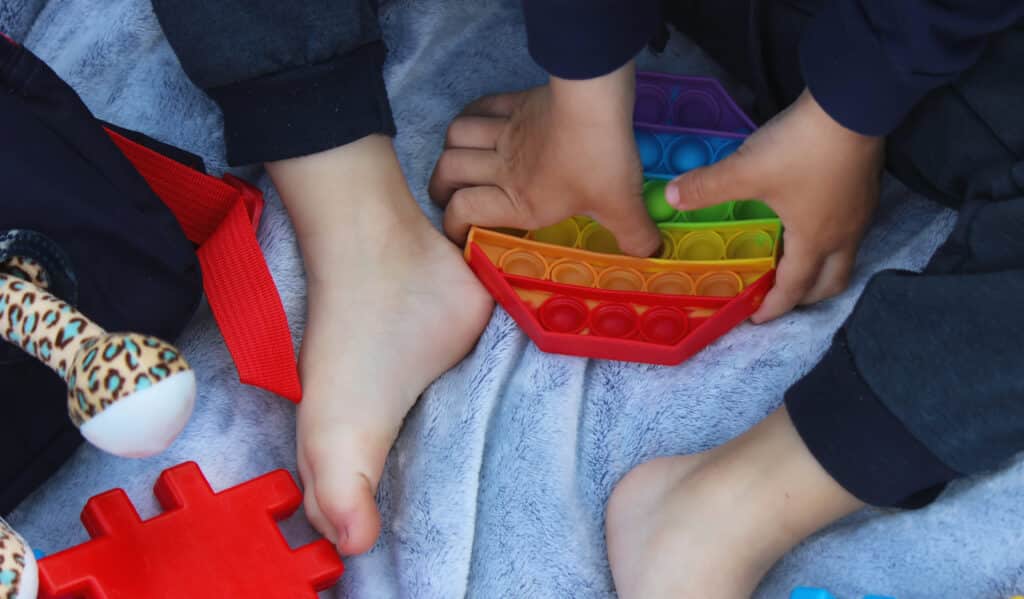
A child with tactile sensitivity may avoid certain clothing, grooming tasks, messy play, or food textures. Other children may seek more tactile input. They may touch everything nearby, prefer firm hugs, enjoy deep pressure, or use fidgets to help their body feel calmer and more organized.
2. Vestibular System
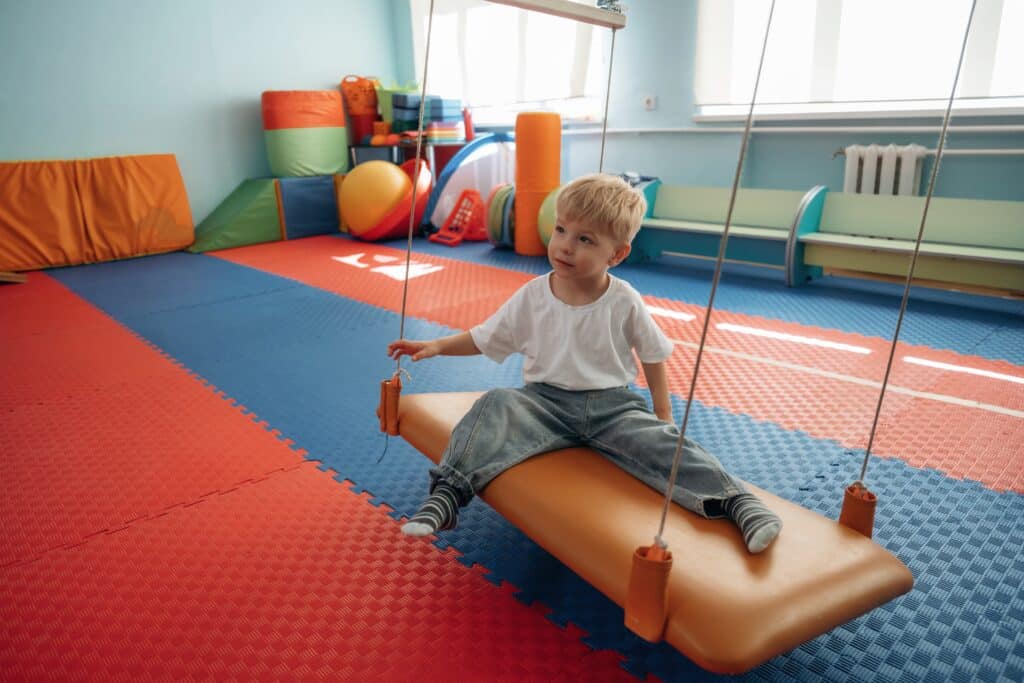
The vestibular system is located in the inner ear and helps the body understand movement, balance, and changes in head position. It supports activities like swinging, climbing, running, spinning, and sitting upright.
Some children avoid movement because it feels scary or disorienting. Others crave movement and may spin, jump, rock, climb, or seek fast-paced physical activities to get the sensory input their bodies want.
3. Proprioceptive System
The proprioceptive system uses information from muscles, joints, and connective tissues to help the body understand position and force. It helps children know where their arms and legs are without having to look.
When the proprioceptive system needs support, a child may bump into things, press too hard, use too much force, or seem unaware of personal space.

What Sensory-Based Support Can Look Like
Occupational therapy may use sensory-based interventions to help a child respond to sensory input and participate more comfortably in daily routines. Sessions may include sensory techniques, environmental modifications, parent or teacher coaching, and practice with everyday activities.
The goal is to help the child participate more comfortably in daily life, from haircuts and meals to playground games, school days, and transitions.
Ayres Sensory Integration (ASI) is a specific therapy model with a defined framework developed by A. Jean Ayres. Most therapists do not provide formal ASI. Instead, occupational therapists may use sensory-based interventions as part of a comprehensive treatment plan.
Research is still developing, but a systematic review in Autism Research found that ASI met evidence-based practice criteria for autistic children ages 4 to 12 when trained occupational therapists closely followed the approach.
How Occupational Therapy Supports Sensory Needs
Occupational therapists often help children with sensory needs as part of a broader occupational therapy plan. A pediatric occupational therapist evaluates each child’s sensory processing, movement, motor skills, daily routines, and family priorities before creating a treatment plan.
Treatment may include specific sensory techniques, sensory-friendly environmental changes, parent and teacher coaching, consultation, and practice with everyday tasks. These sensory-based interventions are used as part of a broader treatment plan that connects clinic work to real life.
Ivy Rehab for Kids’ pediatric occupational therapy teams work closely with families so sensory strategies and supports can carry over into home, school, and daily routines.
Find an Occupational Therapist Near You
If your child has difficulty with sensory processing, motor planning, self-regulation, or daily routines, an occupational therapy evaluation can help explain what’s going on and what support may help.
Find an Ivy Rehab for Kids location near you that offers pediatric occupational therapy. Your child’s therapist can identify sensory needs and build a practical plan for home, school, and everyday life.
FAQs
Do Sensory-Based Interventions Help?
Occupational therapists may use sensory-based interventions, environmental changes, and caregiver coaching to support attention, regulation, and participation in daily life.
Results depend on the child’s needs, the therapy approach, and how well strategies carry over outside the clinic.
How Can I Tell if My Child Needs Sensory Integration Support?
An evaluation may help if sensory issues affect meals, grooming, dressing, play, sleep, school, transitions, or emotional regulation. Signs may include meltdowns in busy places, strong reactions to textures or sounds, constant need to move, clumsiness, or difficulty with self-care tasks.
Is Sensory Processing Disorder the Same as Autism?
No. Sensory processing difficulties are common in autistic children and children with attention deficit hyperactivity disorder (ADHD), but they can also happen without either condition.
If sensory difficulties affect daily life, an occupational therapy evaluation can identify what kind of support a child may need.
What Does a Session With Sensory Integration Support Look Like?
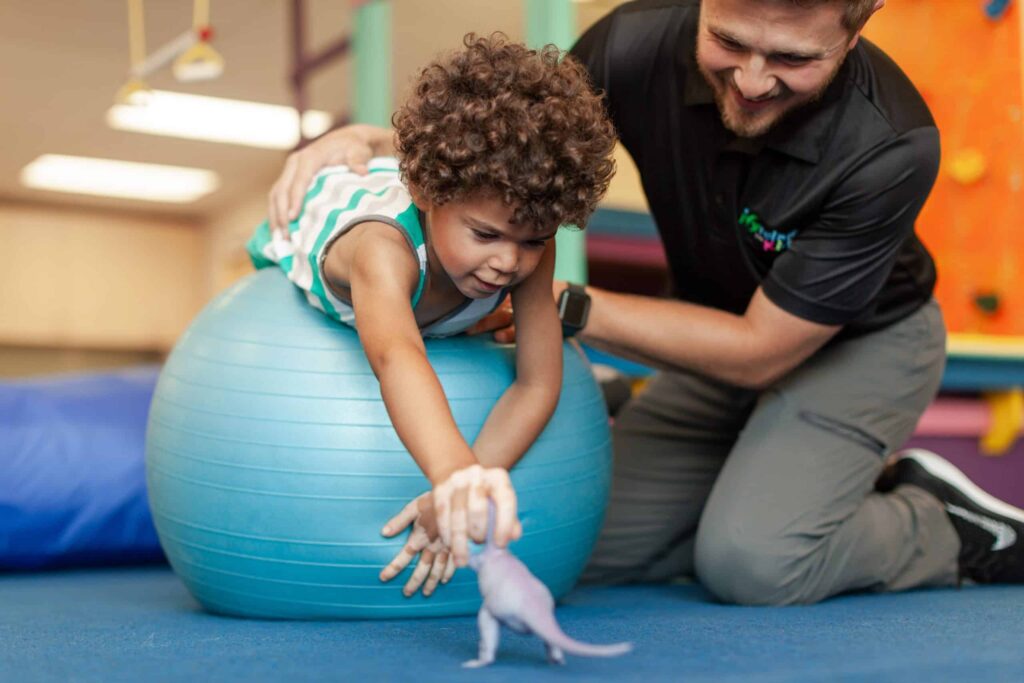
Therapy often looks like play, but each activity has a purpose. A child may swing, climb, crawl through an obstacle course, use tactile materials, practice balance, or complete motor planning activities while the occupational therapist adjusts the challenge to match their needs.
What Is the Difference Between Sensory Integration and Sensory Processing?
Sensory integration is how the brain organizes input from multiple senses so the body can respond. Sensory processing is a broader term for how the brain receives, filters, and interprets sensory information. In everyday use, the terms often overlap.
References
- A Systematic Review of Ayres Sensory Integration Intervention for Children With Autism. Autism Research. Accessed March 2026. https://onlinelibrary.wiley.com/doi/10.1002/aur.2046
- Efficacy of Occupational Therapy Using Ayres Sensory Integration: A Systematic Review. American Journal of Occupational Therapy. Accessed March 2026. https://research.aota.org/ajot/article/72/1/7201190010p1/6422/Efficacy-of-Occupational-Therapy-Using-Ayres

Before you go
Find the right therapy today.
Discover how Ivy Rehab can help you get back to doing what you love.