

Soft Tissue Mobilization
Soft tissue mobilization is a hands-on physical therapy technique that focuses on the body’s muscles, tendons, ligaments, and fascia. Physical therapists use it to help reduce pain, improve tissue mobility, and make movement feel easier.
Your physical therapist will look at what’s causing the restriction, choose the right technique, and pair treatment with exercises that help the improvements carry over into daily life.
What Is Soft Tissue Mobilization?
Soft tissue mobilization is a type of manual therapy. It uses skilled pressure, movement, and stretching techniques to address restrictions in the body’s soft tissues.
Soft tissues include:
- Muscles.
- Tendons.
- Ligaments.
- Fascia, which is the connective tissue that surrounds and supports muscles and other structures.
When soft tissue gets irritated, tight, injured, or restricted, it may not move as well as it should. You may notice pain, stiffness, tenderness, limited range of motion, or a pulling feeling with movement.
In some cases, soft tissue restrictions may involve adhesions, which are areas where tissue layers do not glide smoothly. Trigger points can also develop, creating tender spots in a muscle that may cause pain nearby or in another area of the body.
Soft tissue mobilization helps your physical therapist address those restrictions in a targeted way. The goal is to help the tissue move better, reduce discomfort, and support better movement overall.
Soft Tissue Mobilization at Ivy Rehab
Soft tissue mobilization is one part of a complete physical therapy plan. It’s not used as a one-size-fits-all treatment.
Your physical therapist starts by evaluating your movement, symptoms, strength, flexibility, and the tissue around the painful or restricted area. From there, they choose the techniques that fit your condition, comfort level, and goals.
Treatment may include hands-on soft tissue work, instrument-assisted soft tissue mobilization (IASTM), myofascial release, trigger point therapy, or a combination of techniques. Your physical therapist will explain what they’re doing, why they’re using that approach, and what you may feel during and after treatment.
Soft tissue work often feels most helpful when it’s paired with exercise. Manual therapy may help reduce restriction and discomfort, but strengthening, stretching, and movement retraining help your body keep those gains.
Conditions That May Benefit From Soft Tissue Mobilization
Soft tissue mobilization may be used when pain, stiffness, scar tissue, or limited mobility affects how you move. Your physical therapist will determine whether it can help your condition after an evaluation.
Soft tissue mobilization may be used to support care for:
- Back pain and neck pain related to muscle tension or tissue restriction.
- Tendon irritation, including tennis elbow or patellar tendinopathy.
- Plantar fasciitis and other foot or ankle conditions.
- Scar tissue after surgery or injury.
- Sprains and soft tissue injuries that still feel stiff or painful.
- Chronic muscle tension or trigger points.
- Knee pain, shoulder pain, or wrist and hand symptoms.
- Shin splints and other overuse injuries.
- Bursitis and other conditions that involve irritated soft tissue.
If restricted tissue is part of what’s limiting your movement, targeted treatment may help you move with less pain and more confidence.
Our Soft Tissue Mobilization Techniques
Hands-On Soft Tissue Mobilization
The physical therapist uses their hands to apply specific pressure and movement to the affected tissue. Your therapist may use slow, steady pressure, rhythmic movement, stretching, or friction-based techniques.
This approach can help address muscle tightness, tissue restriction, tenderness, and movement limits. Your physical therapist adjusts pressure and technique based on how your body responds.
Instrument-Assisted Soft Tissue Mobilization
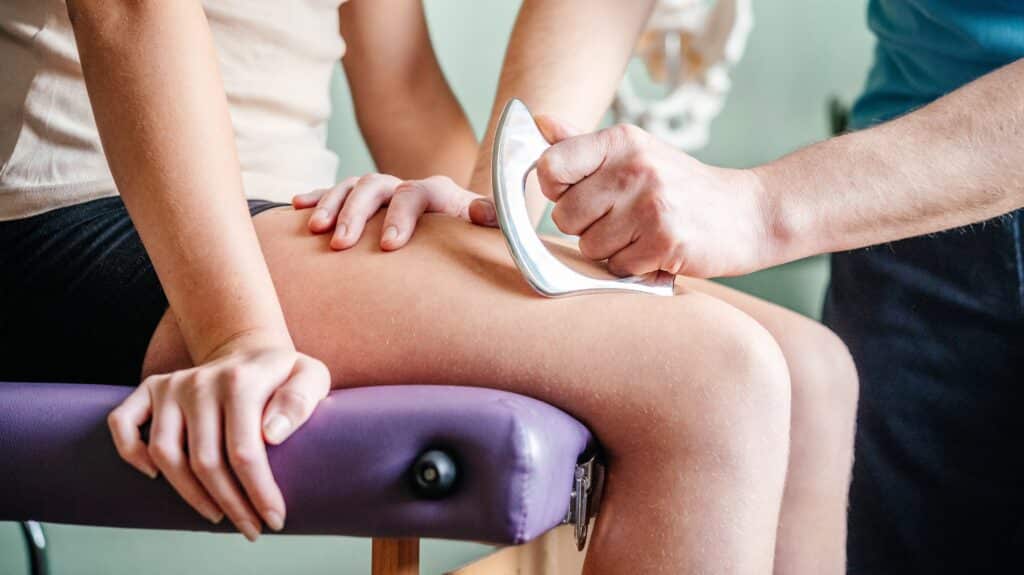
Instrument-assisted soft tissue mobilization uses specialized tools to assess and treat areas of soft tissue restriction. These tools may help your physical therapist feel changes in tissue texture and apply targeted pressure to a specific area.
IASTM may be used for scar tissue, long-lasting soft-tissue restrictions, tendon irritation, or areas that are harder to treat with hands alone. Some approaches, such as the Graston Technique and ASTYM, use proprietary tools and treatment methods.
Your physical therapist will decide whether IASTM makes sense for your condition and explain what to expect before treatment starts.
Myofascial Release
Myofascial release focuses on fascia, the connective tissue that surrounds and supports muscles. When fascia becomes tight or restricted, it may contribute to pain, stiffness, or a feeling of limited movement.
This technique often uses gentle, sustained pressure. The goal is to help the tissue relax, move more freely, and reduce tension that may affect nearby areas.
Trigger Point Therapy
Trigger points are tight, tender spots in a muscle. They can cause pain in the same area or send pain to another part of the body.
Trigger point therapy uses direct pressure to help calm irritated spots. It may be paired with stretching, strengthening, posture work, or movement retraining, so the same tension is less likely to return.
How We Approach Soft Tissue Mobilization
Step 1: A Physical Therapy Evaluation
Effective soft tissue treatment starts with understanding the source of the problem. Your physical therapist will ask about your symptoms, injury history, surgery history, daily activities, and goals.
They may also assess your range of motion, strength, posture, flexibility, tenderness, and how the affected area moves. The evaluation helps your therapist decide whether soft tissue work should be part of your care plan.
Step 2: Targeted Manual Therapy
Once your physical therapist knows what’s restricted, they choose the technique that best fits your needs. Treatment may feel gentle, firm, or tender depending on the area and the method used.
You shouldn’t feel like you have to “push through” intense pain. Your physical therapist will check in throughout treatment and adjust pressure based on your comfort and response.
Some soreness after treatment can happen, especially when working on sensitive or restricted tissue. Your physical therapist will let you know what is expected and what should be reported.
Step 3: Exercise and Movement Carryover
Soft tissue treatment is only one part of recovery. The next step is helping your body use that improved mobility in real life.
Your physical therapist may add exercises that support:
- Strength.
- Flexibility.
- Range of motion.
- Posture.
- Balance.
- Better movement patterns.
- A home exercise program that fits your routine.
That combination helps turn short-term relief into better movement during the activities that matter most to you.
FAQs
Can Soft Tissue Mobilization Help With Scar Tissue?
Yes, soft tissue mobilization may help when scar tissue limits movement or causes discomfort after injury or surgery.
Treatment can help improve how the tissue moves and feels. Your physical therapist may use hands-on techniques, instrument-assisted treatment, stretching, and exercises to support mobility around the scar and nearby joints.
How Many Sessions Does Soft Tissue Mobilization Take?
The number of sessions depends on your condition, how long symptoms have been present, and how your body responds to treatment.
Some people notice changes within a few visits. Others need more time, especially after surgery, long-term pain, or a recurring injury. Your physical therapist will give you a clearer idea after your evaluation.
Is Soft Tissue Mobilization the Same as Massage Therapy?
They can look similar, but they’re not the same.
Massage therapy often focuses on relaxation, stress relief, and general muscle tension. Soft tissue mobilization is a clinical physical therapy technique used as part of a treatment plan for a specific movement problem, injury, pain pattern, or recovery goal.
What Does Soft Tissue Mobilization Feel Like?
Soft tissue mobilization can feel like light pressure, firm pressure, stretching, or focused work on a tender area. The feeling depends on the technique, the tissue being treated, and your comfort level.
Some people feel relief during or after treatment. Others may feel sore for a day or two, similar to post-workout soreness. Your physical therapist will adjust treatment based on your feedback.
What Is the Difference Between IASTM, Graston Technique, and ASTYM?
Instrument-assisted soft tissue mobilization, or IASTM, is the broader category. It refers to soft tissue treatment that uses specially designed tools.
The Graston Technique and ASTYM are specific approaches within that broader category. They use their own tools, methods, and training. Your physical therapist will choose the approach that fits your condition, symptoms, and care plan.

Take the first step toward relief.
You don’t have to live with back pain. Ivy Rehab’s expert team is ready to help you move better, feel stronger, and enjoy life without limitations. Schedule an appointment today for the best treatment for back pain.